By Jane achieng
Fig 1: Luo Calender
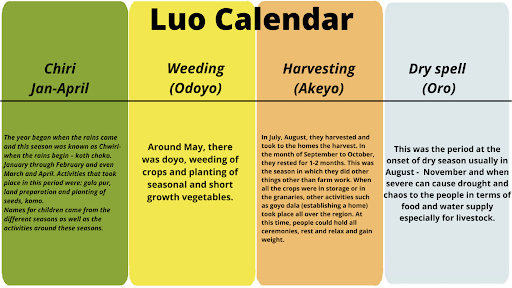
The year began when the rains came and this season was known as Chwiri- when the rains begin – koth chako. January through February and even March and April. Activities that took place in this period were: golo pur, land preparation and planting of seeds, komo.
In the modern calendar, this is January through February and even March and April, land was prepared and seeds planted. Specifically, land preparation known as golo pur took place between January and February in preparation for the rains and when the rains were just about to come, they planted and sowed their seed. Planting involved various processes for the different seeds of plants grown. There were crops in which the seeds were buried into the soil such as bel, millet, oduma or bando, maize. There were those sown, ichuoyo, such as nyim, simsim, kal, finger millet while still others were grown from the cuttings such as muogo, cassava, rabuon, sweet potatoes. Names for children came from the different seasons as well as the activities around these seasons.
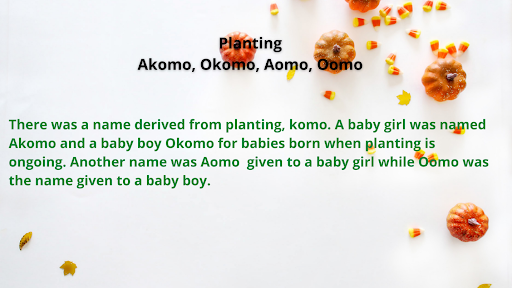
There was a name derived from planting, komo. A baby girl was named Akomo and a baby boy Okomo for babies born when planting is ongoing. Similarly, Aomo was also used to name a baby girl while Oomo was the name given to a baby boy.
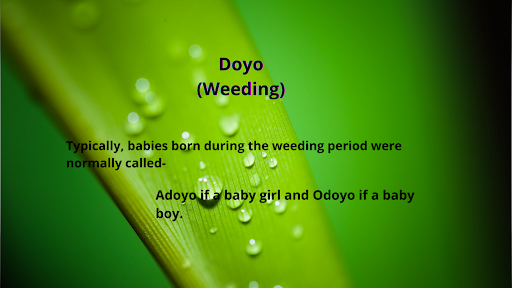
Around May, there was doyo, weeding of crops and planting of seasonal and short growth vegetables. Typically, babies born during the weeding period were normally called Adoyo if a baby girl and Odoyo if a baby boy.
In July, August, they harvested and took to the homes the harvest. In the month of September to October, they rested for 1-2 months. During the season of harvest, babies born within this period of harvest and plenty would be called Akeyo if a baby girl or Okeyo if a baby boy. After the harvest (keyo) there was a short period of dry season known as ndalo oro. This was the season in which they did other things other than farm work. When all the crops were in storage or in the granaries, other activities such as goyo dala (establishing a home) took place all over the region. At this time, people could hold all ceremonies, rest and relax and gain weight.

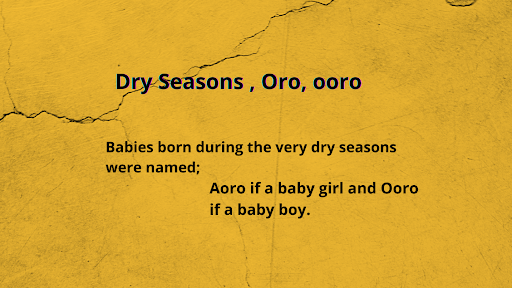
Extreme dry weather that caused water shortage was a bad time for the community. If the dry season, ndalo oro went on for a long time or was unusually intense, a baby boy born at this time was named Ooro and a baby girl would be called Aoro.
This followed the dry period, Oro with a short season rainy season known as opon and in this season, farming land preparation and planting takes over again. This was around the month of October when they would prepare the land for Opon, the second crops of the season. This went on till November, December, January and even February when the crops were harvested Golo miere, goyo dala was also done in this space of time, after cham owuok e puodho (harvest was brought home. In some areas, it went on to the month of August -January and even February for places that planted one season crops. Establishing a home was not allowed during the rainy seasons because of the cold, the rain and the attendant discomforts and spirits of the rainy season.
Babies born during the second land preparation season were called Opon for a baby boy and Apone/Pone for a baby girl. However, it has been noted that Apon is not a common name while Opon is more common and frequently used.
Within the odiechieng, daytime and otieno, night, time space, names were picked from the prevailing weather condition at the time of birth. To this effect, Akoth was the name given to a baby girl and Okoth given to a baby boy for a baby born when it was raining.
Likewise, when it was cold and misty or even during the darkness caused by, for example, an eclipse of the sun when it gets so dark that domestic animals behave as if it is time to go home, a baby girl born at such a time was called Aluoch and a baby boy would be named Oluoch.
And one who is born when it is raining with hailstorms is called Ape for a baby girl and Ope for a baby boy.
© Jane Achieng, 2018
